
Theory of chlorination & operation
How It Works
Sodium hypochlorite, “NaOCl” (also known as “hypo”, “bleach”, or “liquid chlorine”), is a powerful oxidant that is used world-wide for the disinfection of water through chlorination
Hydramet®
On-site chlorine generation technology
EST develops technology to produce chlorine on site through electrochlorination with common salt, water, and electricity (or solar power), generating 0.6% sodium hypochlorite at the point of use.
Hydramet® produces fresh sodium hypochlorite using only salt, water, and electricity, providing a safe, efficient, and sustainable chlorine source for multiple industries and applications.
How electrolysis works
Electrical current converts a salt solution into stable sodium hypochlorite. Active chlorine is generated on demand without compressed gas or degraded drums.
Why use salt
Salt is safe to store, low cost, and globally available. It removes dependence on unstable imported chemicals.
Why produce chlorine locally
It reduces logistics, handling risks, and operational downtime. Chlorine is produced when and where you need it.
Fresh chlorine advantages
Higher disinfectant strength, predictable dosing, and no potency loss during transport or long storage.
System durability
Hydramet® is engineered for continuous operation in municipal, industrial, and humanitarian deployments with minimal maintenance.
Solar versions
AC-5 Solar and AC-25 Solar models enable deployment where grid power is unreliable.
Comparison against alternatives
Three conventional methods compared with on-site Hydramet® generation.
Chlorine gas
- Hazardous storage
- Regulated logistics
Safe on-site production
Commercial hypochlorite
- Degradation and expiry
- Variable cost
Fresh on-demand chlorine
Calcium hypochlorite
- Handling and dissolution
- Batch cost
Predictable salt + power
Operational & safety benefits
- No chlorine gas cylinders or degrading commercial hypochlorite drums to store.
- On-demand production from salt, water, and electricity (or solar power).
- Lower logistics, reduced handling risk, and operational continuity on site.
- Predictable cost and fresh disinfectant with higher available strength.
Sodium Hypochlorite
How on-site sodium hypochlorite is produced?
Salt is composed of sodium and chloride. When in solution and electricity DC is passed through special electrodes, the chlorides will disassociate to form chlorine. The process is basically as follows:
- Electrolysis occurs in a cell when a DC current is passed through a saline water solution or brine.
- At the anode: Oxidation of chloride ions produce chlorine (Cl2).
- At the cathode: Reduction of water produce sodium hydroxide (NaOH) and hydrogen (H2).
Liberated chlorine reacts with the sodium hydroxide to generate sodium hypochlorite (NaOCl).
The overall reaction is as follows:
2NaCl (salt) + H2O (water) NaOCl (hypo) + NaCl (salt) + H2 (hydrogen)
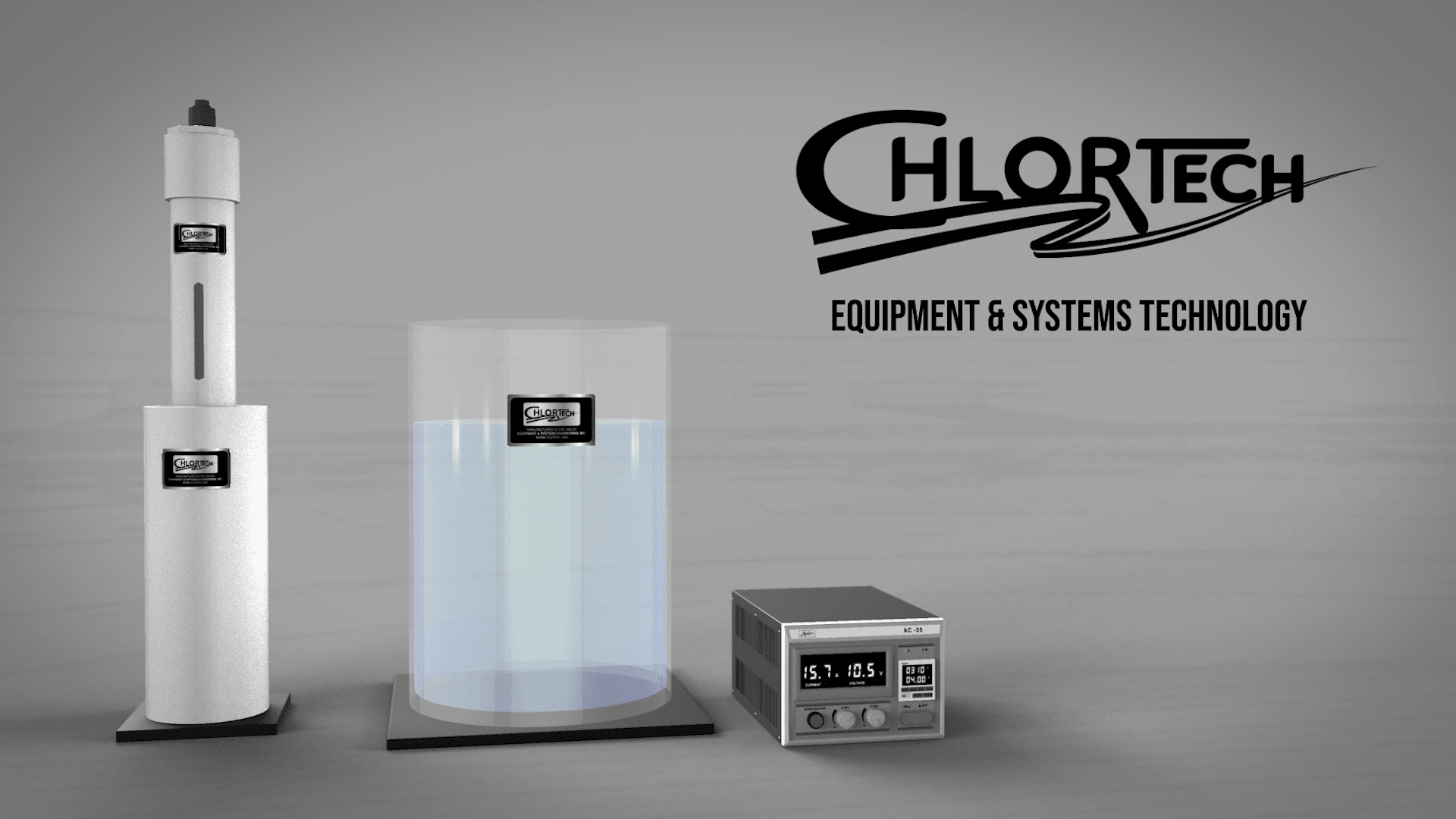

Hydramet produces 0.6% sodium hypochlorite on site.
An electrolytic process that eliminates dependence on hazardous chemicals.
Three basic inputs and low-maintenance technology with up to 15 years of service life.
“WHERE INFRASTRUCTURE DOESN'T REACH, OUR TECHNOLOGY DOES.”
Dosing of chlorine into the water
One liter of 0.6% (6000 ppm) sodium hypochlorite solution mixed into 6000 liters of water will produce a 1ppm concentration. Likewise, to produce a 2 ppm concentration, add 2 liters of 0.6% sodium hypochlorite solution to 6000 liters of water.
| TANK CAPACITY | DOSAGE OF THE SOLUTION OF NaOCl AT 0.6% CONCENTRATION | |||||||||
|---|---|---|---|---|---|---|---|---|---|---|
| 2 PPM | 3 PPM | 4 PPM | ||||||||
| Gals. | Liters. | Liters. | Gals. | Grams of Cl₂ | Liters. | Gals. | Grams of Cl₂ | Liters. | Gals. | Grams of Cl₂ |
| 1000 | 3785 | 1.3 | 0.33 | 7.57 | 1.9 | 0.5 | 11.36 | 2.5 | 0.67 | 15.14 |
| 5000 | 18927 | 6.3 | 1.67 | 37.85 | 9.5 | 2.5 | 56.78 | 12.6 | 3.33 | 75.71 |
| 6000 | 22712 | 7.6 | 2.0 | 45.42 | 11.4 | 3.0 | 68.14 | 15.1 | 4.0 | 90.85 |
| 7000 | 26498 | 8.8 | 2.33 | 53.0 | 13.2 | 3.5 | 79.49 | 17.7 | 4.67 | 105.99 |
| 8000 | 30283 | 10.1 | 2.67 | 60.57 | 15.1 | 4.0 | 90.85 | 20.2 | 5.33 | 121.13 |
| 9000 | 34069 | 11.4 | 3.0 | 68.14 | 17.0 | 4.5 | 102.21 | 22.7 | 6.0 | 136.27 |
| 10000 | 37854 | 12.6 | 3.33 | 75.71 | 18.9 | 5.0 | 113.56 | 25.2 | 6.77 | 151.42 |
Key Benefits
Advantages of Electrochlorination
Raw material:
locally available (water + salt + electricity).
On-site:
generated at the point of use and application.
On demand:
only when required.
No bulk storage:
because is generated on demand.
Safe for the operator:
low concentration.
Safe for environment:
chlorine desomposes back into common salt.
Generate Sustainable Projects
Common Questions
Frequently Asked Questions
What is the concentration of the disinfectant produced?
The disinfectant produced will contain 6 grams of available equivalent chlorine per liter of solution. The concentration is 6000 parts per million or 6000 ml per lit
What is the expected lifetime of the system?
The electrodes are warranted for one year form the purchase date, but with proper care will last well beyond that time.
What maintenance is required?
Mineral deposits accumulate on the surface of the electrodes during normal operation. The rate of accumulation depends on the quality of the water used to produce the sodium hypochlorite. To remove the mineral deposits the electrode needs to be submerged in a weak acid solution or white vinegar.
How much disinfectant should I use for drinking water?
That depends on the amount of organic contaminants in the water. Typically you will want to dose enough disinfectant to neutralize all the organic material in the water and leave a residual of <0.6PPM of chlorine. A dose of 2 PPM is commonly used.
How efficient is the Sodium Hypochlorite solution compared to Gas Chlorine and Calcium Hypochlorite in the water disinfection?
The chlorine available for disinfection contained in gas chlorine, calcium hypochlorite and sodium hypochlorite is exactly the same and do the same work.
How complicated is to operate and maintain these units?
It is extremely easy to use and maintain. There aren't any specific required skills or prior knowledge to operate the equipment.